

Wisdom Teeth Removal in North York
Signs your wisdom teeth should be assessed
- Pain or pressure at the back of the jaw
- Swelling, redness or repeated infection of the gum around a partly erupted tooth
- Jaw stiffness or difficulty opening fully
- Food repeatedly getting trapped behind the back molar
- A cyst or damage to the neighbouring tooth found on an X-ray
Not every wisdom tooth needs to come out. Teeth that have erupted fully, sit in a healthy position and can be kept clean can often simply be monitored at your regular checkups.
What happens at a wisdom tooth assessment
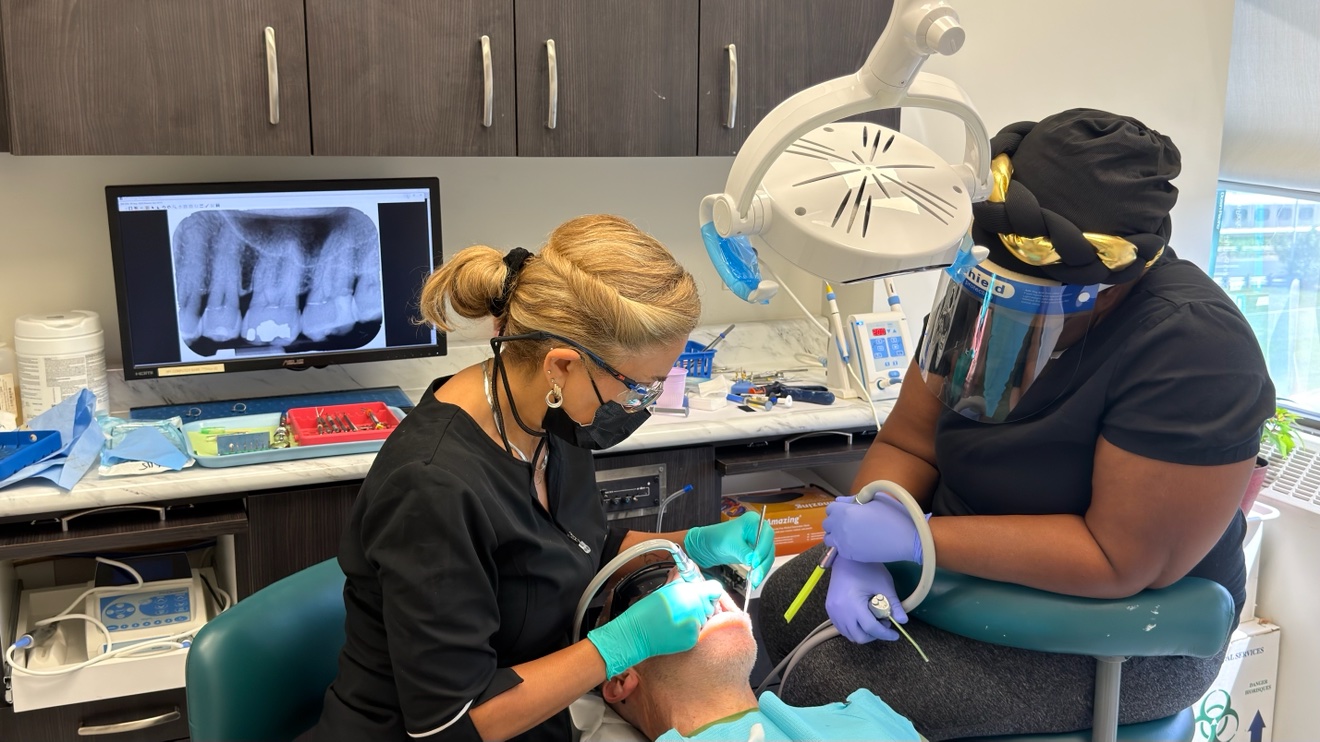
Dr. Ghanaat examines the area and takes X-rays to see the position of each wisdom tooth, the direction it is growing, and how close it sits to the neighbouring tooth and nearby structures. You will then discuss the options together: monitoring the tooth, removing it at our office, or — for complex impactions — a referral to an oral surgeon. The choice is always explained before any treatment is booked.
Removal at our office, and when we refer
Straightforward wisdom tooth removals are performed at our office by our general dentist. The area is numbed with local anesthetic before treatment begins. For younger patients, nitrous oxide (laughing gas) may be used to help them feel more at ease, where appropriate. Wisdom teeth that are deeply impacted, positioned close to a nerve, or otherwise complex are referred to an oral and maxillofacial surgeon — we would rather send you to the right provider than attempt a case that belongs with a specialist.
After removal
Most patients rest for a few days after a wisdom tooth removal. You will receive written aftercare instructions covering eating, cleaning the area and managing discomfort with over-the-counter pain relief. Following those instructions — especially keeping the area clean and avoiding smoking while it heals — lowers the risk of complications such as dry socket. If anything concerns you during recovery, call us at (416) 787-1275.
Wisdom teeth and the Canadian Dental Care Plan (CDCP)
Wisdom tooth removal may be covered under the Canadian Dental Care Plan for eligible patients, depending on the treatment and the plan’s rules. Our team bills the CDCP directly. See our CDCP page for how the plan works, or ask us to check your situation before treatment.
Frequently asked questions
Do all wisdom teeth need to be removed?
No. Wisdom teeth that erupt fully, sit in a good position and can be kept clean can often be left in place and monitored. Removal is recommended when a tooth is impacted, repeatedly infected, damaging the neighbouring tooth, or likely to cause these problems.
At what age should wisdom teeth be checked?
The late teens are a good time for a first assessment, because the teeth and their roots are still developing and X-rays can show how they are likely to come in. Adults who were never assessed can have their wisdom teeth checked at any age.
Will the removal hurt?
The area is numbed with local anesthetic before treatment begins, so you should feel pressure rather than pain during the procedure. Some soreness for a few days afterward is normal and is usually managed with over-the-counter pain relief and rest.
How long is the recovery?
Most people return to light activities within a day or two and feel back to normal within about a week. Following the aftercare instructions we give you helps the area heal without complications.
Does the CDCP cover wisdom teeth removal?
It may, for eligible patients, depending on the treatment required and the plan’s rules. We bill the CDCP directly — contact us and we can explain what to confirm before your appointment.
What happens if I leave an impacted wisdom tooth alone?
Sometimes nothing, which is why monitoring is an option. But an impacted tooth can also lead to repeated gum infections, decay in the tooth behind it, or a cyst. An assessment with X-rays shows which course is safer in your case.
Can I be put to sleep for wisdom tooth removal?
No. The only sedation we offer is nitrous oxide (laughing gas), which helps you relax while you stay awake; the area itself is numbed with local anesthetic. If your case needs IV sedation or general anesthesia, we will refer you to an oral surgeon who provides it.
Our Services


Orthodontics
A straight smile strengthens self-confidence. We offer effective solutions for children and adults.

Oral Surgery
Our general dentist provides tooth extractions and routine oral surgical procedures, and refers more complex cases to a specialist.
Gum Disease
Get a professional clean to remove plaque, tartar and bacteria to prevent gum disease.
Root Canal Therapy
Repair and save your badly damaged or infected tooth instead of removing it.
Extractions
Remove your impacted wisdom teeth or mobile tooth.
Emergency Services
Toothaches, broken teeth, chipped or knocked out teeth, come to see us for all your dental problems!
Nitrous Oxide Sedation
Inhale the laughing gas and forget about your dental phobia!
Crowns and Bridges
Restore the function and appearance of your broken, chipped, or missing teeth.
Cosmetic Dentistry
Achieve your most desirable smile utilizing procedures like veneers, zoom whitening, and dental bonding.
Teeth Alignment
Transform your smile without disturbing your everyday life with the most modern orthodontic treatments.
Working Hours
Book a wisdom tooth assessment — Yorkdale Dental Centre, 1 Yorkdale Rd, Office Tower, Unit 415, Toronto. Open Monday to Thursday 9AM–7PM, Friday by appointment, Saturday 9AM–3PM. Call (416) 787-1275.
Yorkdale Dental Centre
Dr. Shadi Ghanaat and our dental team work to ensure you receive appropriate treatment.
1 Yorkdale Rd. Office Tower, Unit 415 TORONTO, ON M6A 3A1
Our Services
© 2026 Yorkdale Dental Centre. All rights reserved in clinic-owned content. Website design and development by Orchid Dental Needs. All other rights remain with their respective owners.

Yorkdale Dental Centre
Dr. Shadi Ghanaat and our dental team work to ensure you receive appropriate treatment.
1 Yorkdale Rd. Office Tower, Unit 415 TORONTO, ON M6A 3A1
Our Services
© 2026 Yorkdale Dental Centre. All rights reserved in clinic-owned content. Website design and development by Orchid Dental Needs. All other rights remain with their respective owners.