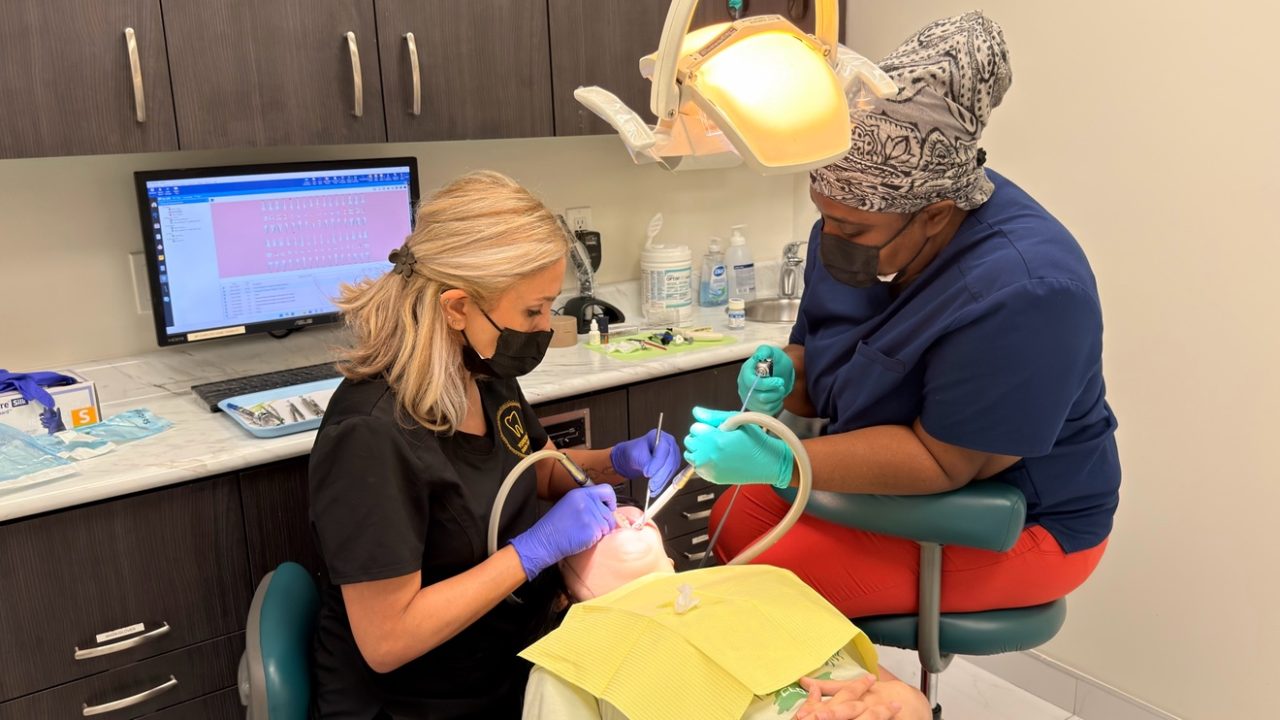
A knocked-out permanent tooth is one of the few dental emergencies where minutes genuinely matter. If the tooth is handled correctly and treated within about 30 to 60 minutes, it can often be reimplanted and saved. Here is exactly what to do.
In this guide: Step 1 · Step 2 · Step 3 · Step 4 · Step 5 · Baby teeth · At the dentist · FAQs
Step 1: Pick the tooth up by the crown
Hold the tooth by the crown — the white top part you normally see — and never by the root. The root surface carries delicate fibres that help the tooth reattach, and touching or scrubbing it damages them.
Step 2: Rinse briefly, do not scrub
If the tooth fell on the ground, rinse it for a few seconds under gently running water or with milk. Do not scrub it, do not use soap, and do not wrap it in tissue or cloth, which dries it out.
Step 3: Put it back if you can
If you are able, place the tooth gently back into its socket, facing the right way, and bite down softly on a clean cloth or gauze to hold it in place. This is the best storage there is — the tooth stays in its natural environment.
Step 4: If you cannot put it back, keep it moist
Place the tooth in a small container of milk, or hold it inside your cheek between your teeth and gum. A tooth must never be allowed to dry out. Plain water is a last resort for short periods only.
Step 5: See an emergency dentist immediately
Call an emergency dentist right away and go in as quickly as you can. At Yorkdale Dental Centre in Toronto, same-day emergency appointments are available during opening hours — call (416) 787-1275. Bring the tooth with you.
What about a knocked-out baby tooth?
Do not try to put a baby tooth back — reinserting it can damage the permanent tooth developing underneath. Rinse your child’s mouth, apply gentle pressure with a clean cloth if there is bleeding, and call the dentist the same day so the area can be checked.
What will the dentist do?
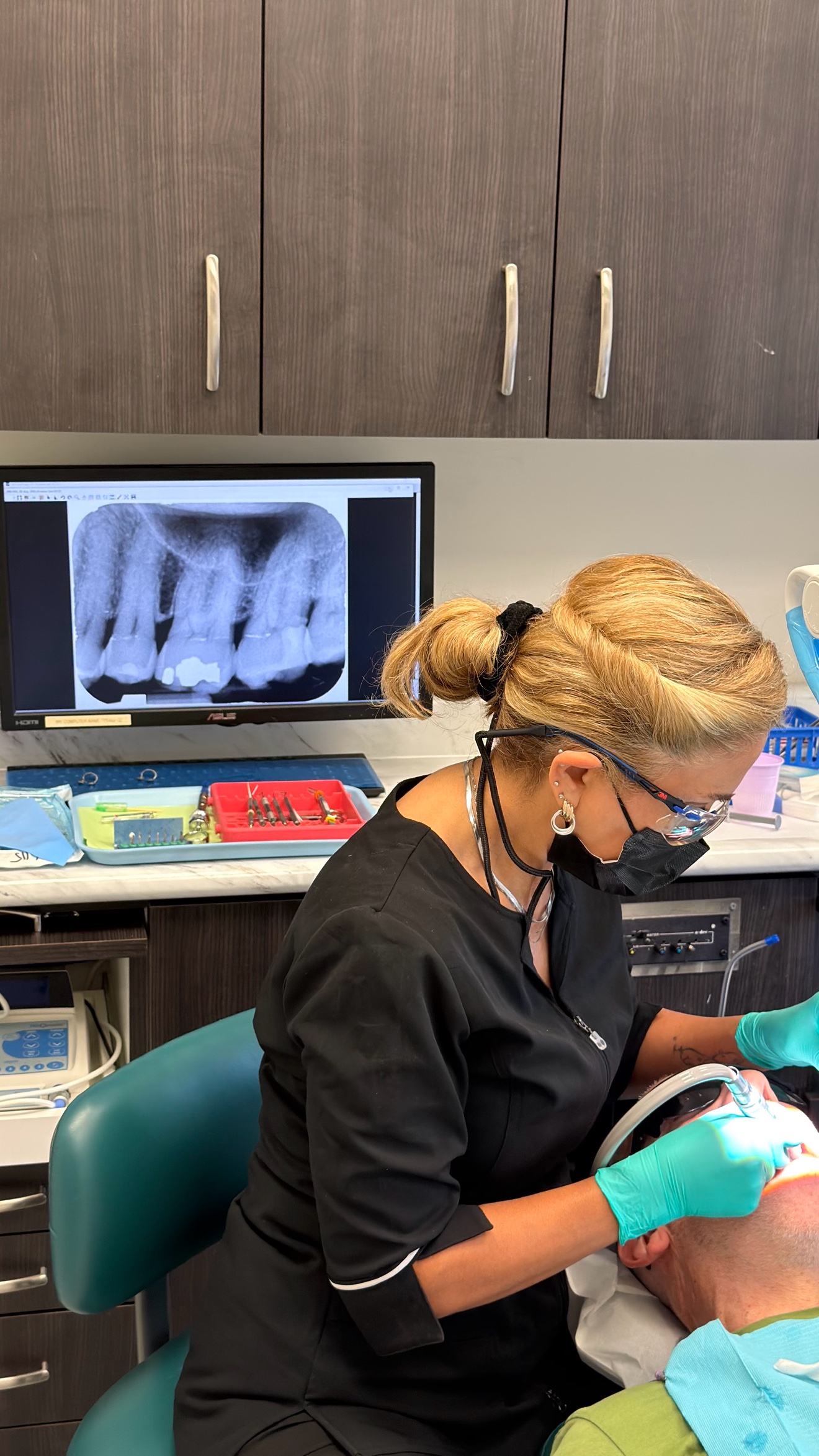
The dentist will examine the area, take an X-ray, and — for a permanent tooth that arrived in good condition — place the tooth back into the socket and stabilize it with a small flexible splint, usually for a couple of weeks. Follow-up visits check how the tooth is healing; root canal treatment is sometimes needed later, which the dentist will discuss with you. Even if more than an hour has passed, still go in: the tooth may still be saveable, and the socket and surrounding teeth need assessment either way.
Sources and further reading: The first-aid steps above follow the International Association of Dental Traumatology’s guidelines for avulsed (knocked-out) teeth, published for patients and dentists through The Dental Trauma Guide. Ontario patients can find more oral-health information from the Ontario Dental Association.
Frequently asked questions
Can a knocked-out tooth really be saved?
Yes, in many cases. A permanent tooth that is kept moist and treated within about 30 to 60 minutes often reattaches successfully after reimplantation and splinting. The chances fall the longer the tooth stays dry and out of the mouth, which is why acting quickly matters.
What is the best way to carry a knocked-out tooth?
Best is back in its own socket. Next best is a container of milk, or inside your cheek. Never carry it dry in tissue, and avoid storing it in plain water for more than a short time.
I cannot get the tooth back into the socket. What now?
Do not force it. Keep the tooth in milk or inside your cheek and go straight to an emergency dentist — bringing the tooth with you, in good condition, still gives it a chance.
My child’s baby tooth was knocked out. Should it go back in?
No. A baby tooth should never be reinserted, because it can damage the developing permanent tooth beneath the gum. Call the dentist the same day so the area can be examined.
It has been more than an hour. Is it too late?
Not necessarily. Go in anyway. The dentist will assess the tooth and socket; even when a tooth cannot be saved, the area needs care, and your options for replacing the tooth can be discussed early.
How can I reduce the risk of a knocked-out tooth during sports?
A properly fitted mouthguard absorbs much of the impact from a blow to the face and is the simplest protection for contact sports and activities such as hockey, soccer, martial arts and mountain biking. A custom-fitted guard made from an impression of your teeth stays in place better and is more comfortable than a boil-and-bite guard, so it is more likely to be worn. Ask the Yorkdale Dental Centre team about a custom sports guard at your next visit.
Dental emergency in Toronto? Yorkdale Dental Centre offers same-day emergency appointments during opening hours. Call (416) 787-1275.